Most women don’t realize they’ve built a ceiling around their next opportunity until they’re standing right in front of it.
It looks like turning down a speaking opportunity because you have nothing to wear. It looks like saying no to the podcast interview because your hair needs to be colored. It looks like quietly opting out of visibility because the version of you that needs to show up doesn’t feel like the version of you that exists right now.
In this episode, Racheal sits down with longtime CEO Collective member Angela Foster – the petite style coach and founder of a thriving one-on-one styling practice – to talk about the invisible barriers women build between themselves and the next level of their business. Angela works specifically with high-achieving executives and entrepreneurs who are 5’3 and under, helping them stop wasting time, energy, and confidence on the daily struggle of getting dressed.
But this conversation is about much more than clothes. It’s about what happens when a smart, capable woman tries to figure everything out on her own and what changes when she finally lets someone support her.
About Angela Foster
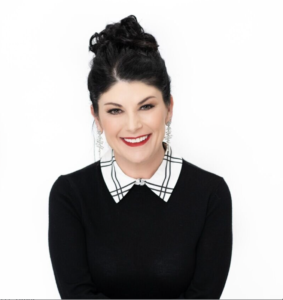 Angela Foster spent 20 years as a fashion and beauty executive – now she uses that expertise to help high-achieving Petite women feel more confident by creating closets they love – ones that truly represent both their personal style and professional brand.
Through her signature SPARK Petite Style Method, Angela’s clients show up feeling prepared and confident whether they’re heading to brand photoshoots, delivering keynote presentations, or simply navigating everyday life. They love their wardrobes because every piece fits their height, flatters their body shape, and reflects who they are. Angela’s expertise has been featured in Real Simple, PureWow, and People magazines.
Angela has been a CEO Retreat attendee for years and is a long-standing member of The CEO Collective.
What You’ll Learn in This Episode
- Why word of mouth is still the gold standard of marketing and what it actually says about your business when clients refer you in rooms you’re not in
- How niching down to a specific audience (women 5’3 and under) expanded Angela’s reach instead of shrinking it
- The “self-imposed ceiling” most women build between themselves and the next opportunity in their career or business
- Why “I’ve taken a bajillion business classes” is a sign you’re being asked to fit into someone else’s framework instead of being supported in building your own
- The exact quarterly numbers moment that finally tipped Angela from CEO Retreat attendee to Collective member
- Why subtracting from your business is harder – and more valuable – than adding to it
- How leaning into your communication strengths beats forcing yourself into trendy marketing tactics every time
Key Concepts from the Episode
The Self-Imposed Ceiling. Visibility opportunities show up unexpectedly – a speaking invitation, a podcast guest spot, a board meeting, a press feature. When women aren’t resourced ahead of time, they quietly turn those opportunities down and tell themselves they’re “too busy.” That’s not a scheduling issue. That’s a capacity issue that’s been disguised as a wardrobe issue.
Get Ready, Don’t Wait Until You’re Ready. Building a sustainable business means preparing for the opportunities you want before they arrive – not scrambling once they do. The women who say yes confidently are the ones who built the systems, the support, and the readiness in advance.
The Framework Should Fit You, Not the Other Way Around. Most business advice tries to squeeze every business into the same template, regardless of fit. For highly relational, high-trust businesses, that “drive-by coaching” doesn’t work – and trying to force it costs years of momentum.
Subtract Before You Add. Growth doesn’t always look like more – more offers, more opt-ins, more nurture sequences, more platforms. Sometimes the most strategic move is pruning the parts of your business that aren’t working so the parts that do work can finally breathe.
Lean Into Your Strengths, Not the Trend. TikTok, Instagram Reels, daily posting – the marketing trend cycle is endless. The CEOs who build sustainable visibility are the ones who lean into how they communicate best, whether that’s writing, podcasting, video, or speaking – and let everything else fall away.
Resources Mentioned
- Angela’s Body Shape Quiz – a special link just for Promote Yourself to CEO listeners. The foundation Angela teaches before color, style, or shopping. angelafoster.co/CEO
- The CEO Retreat – Racheal’s quarterly planning experience for women entrepreneurs ready to step out of the day-to-day and into 90-day CEO planning. The exact retreat Angela attended before joining the Collective. theceocollective.com/retreat
- The CEO Collective® – Racheal’s 12-month operating system and leadership mentorship for service-based women entrepreneurs at $100K–$1M. theceocollective.com/join
Connect with Angela
- Website: angelafoster.co
- Body Shape Quiz: angelafoster.co/CEO
Connect with Racheal
- Website: theceocollective.com
- Instagram: @racheal.cook
- TikTok: @rachealcookmba
- LinkedIn: linkedin.com/in/rachealcook
Racheal: All right, CEOs. I have a very special guest today. Angela Foster, the petite style coach, has been in my world now for a few years, and it has been so incredible to get to know you, Angela, and to watch your business continue to grow and evolve. I'm just so glad that you were able to join me today and share a little bit about yourself and your journey. So welcome.
Angela: Thank you. And thank you for having me. Honestly, four or five years ago, the idea of being with you on your podcast and getting to know you would blow my mind. I mean, I just never thought that that would happen. So it's quite the bucket list item.
Racheal: Oh, you are so sweet. Angela, as we get started, it's so funny because you came into our world and you have a very specific niche. I'd love for you to share a little bit about how you got started as not just a stylist, but a petite stylist. Tell us a little bit about your journey.
Angela: So I've been doing this since end of 2017, beginning of 2018. And it really started out super organically. I had a job in corporate and one of my friends slash peers had just had her second baby and her husband had just left her. This woman is the most incredible, the most amazing, intelligent woman I think I've ever met, and seeing the hit that her self-confidence took during all of this was tough to watch. We were out of town at a sales meeting, and she said, "You know, you just always look so great. You make it always look so easy. Would you be willing to help me? I just don't feel like myself anymore." And I was like, girl, of course I would do anything for you. So we started working together, and honestly, now I look back at that, and I'm like, I'm so sorry. I don't know what I was doing. I would be in the mall and I'd snap a picture and text it to her and be like, "Oh, hey, you should check this out. This would be super cute with your fill in the blank." But anyways, she is like most great saleswomen — she is very vocal when she has a great experience, so she spread the word. And it just grew from there.
Racheal: Amazing. Well, first of all, that just sets up how amazing you are, because businesses that really are able to take off word of mouth — to me, especially in the business space, entrepreneurship space, everybody gets so caught up in all these other ways to grow your business, and they talk down on word of mouth or referrals. And I'm like, no, if you don't have word of mouth or referrals, that tells me your experience is not worth talking about. But if you have people sharing your name in rooms you're not in, and recommending you to their friends and families — that is the gold star of marketing. And it always will be.
Angela: Yes. It always will be. And honestly, from an entrepreneurial standpoint, it's such an honor when these high-achieving executives and entrepreneurs trust me. The majority of them aren't chitter chatting about clothes all day. They have other stuff to do. So the fact that I happen to come up when somebody says, "You look amazing, what's changed?" — that I come up is beyond flattering and just such an honor.
Racheal: Amazing. So you started your business very word of mouth. What made you laser in on petite as the core focus? Because this is also something unique. A lot of people would have just said, "Well, I can style anybody." But I think you had a pretty clear idea of who you wanted to work with.
Angela: Yes. So I'm short. And style for every woman can be difficult, right? We've all run into that thing where it's the morning and we're pressed for time. And we walk into our closet and it's packed with clothes and we're like, "I have nothing. How is this possible?" And then to add insult to injury, we find out that the average woman wastes four days a year trying to figure out what to wear. And then you're like, okay, so that's bad for everyone. And then on top of it, being an executive or an entrepreneur and needing to be visible either for the health of your business or for the growth of your career — and all of a sudden, it just makes everything so much more difficult. So taking clients from that place to feeling confident enough to raise their hand and say, "Yes, absolutely, I will give this presentation in front of the board," or "Absolutely, I would love to be featured on the business channel or in this publication" — taking them through that whole process is incredible. Just watching women's confidence and willingness to grow their business and take that scary step is crazy.
Racheal: Yes, I think it's amazing. And because that's the world you came from, clearly you knew that world very well — being in front of teams or in front of a board or giving presentations. We're in the entrepreneurial space, clearly, as small business owners, but even women in different areas, there's always this upper limit where you have to start being more visible.
Angela: Yes.
Racheal: And it can be tricky. It can become a self-imposed ceiling if you don't resource yourself. And that's what I see a lot of women doing in the business space — they can very easily talk themselves out of, "Well, I don't want to be more visible, because I don't like the way I look. I don't like my clothes. I don't know what to wear." And then opportunities come up for them and they're panicking. What an amazing opportunity to speak — and you have like 24 hours' notice. And what are you gonna do? Turn it down? A lot of people will, because they're like, "I don't have anything to wear. I don't have anything ready." So for me, this is a strategic piece of the puzzle. If you want to be ready — not wait until you're ready, but get ready — for those opportunities that are going to show up in your business or in your career.
Angela: Oh my gosh, Racheal, so true. And so many times they don't want to say, "I don't have anything to wear. I need my hair colored. I need this." So it comes across as, "Yeah, you know what, I'd love to, but I'm really too busy" — because they don't want to admit there's a lot of emotional stuff in there. But that's one of the things — making sure that women are ready for the myriad of opportunities that come up. It sounds like a lot, being prepared for all of the different things that can happen. But really when you think about it — I don't know about you, but my mom was not blessed with this innate style gene. When I started choosing clothes for myself, she didn't take me to the mall and say, "Okay, honey, you have a big butt and short legs, so this is what you should stay away from." Nobody ever says this. So we figure it out on our own — or we try to figure it out on our own. But then we get pregnant or we gain five pounds or we go through menopause. Or a myriad of other things that happen to women. And all of a sudden, what used to work doesn't anymore. And then we're left, again, trying to figure it out on our own. But I always think about it like — I've never taken a golf lesson. I've never watched a golf thing on TV. The whole thought that I would walk over to the golf course and say, "Oh, hey, guys, do you want to play with me today?" and expect me to win is ridiculous. But for some reason, women think that we should pop out of the womb and know exactly how to dress for our shape. It doesn't make sense. We need to give ourselves a little bit of grace there and say, "Okay, this might be a task I need to learn, or a habit I need to make." So it is something you can learn.
Racheal: And that's, thank God, because I definitely do not have the style gene. I tend to get overwhelmed very easy. And it's so funny because you mentioned your mom. My mom was like a jeans and t-shirt kind of girl and very, very casual and never really liked to get dressed up. So that wasn't even a thing for us. Going to the mall — I was going with friends. I was not going with my mother. It was my grandmother who was very stylish, and she actually was a seamstress for a very long time. She worked for a long time making custom clothes. And when my mom was growing up, she would make her clothes too. So I have all these beautiful photographs of my grandmother from the 30s and 40s with these beautiful suits and dresses and things that she would make. And she would tell me how they would get dressed up to go grocery shopping. And I'm just like, okay, clearly times have changed because no one's walking around in heels and little gloves and a hat to go to the grocery store anymore. That is for sure. But it's interesting because we all have these different things that influence what we think we might need to do. And in the world that we are in today, things have shifted so much. Going into the corporate space where you had to wear the suits and the heels, to suddenly working for yourself where you can kind of decide what vibe you're going to have. Are you going to be more relaxed, as I tend to be — wear a uniform most of the time, as I tend to do? Or are you going to be more high fashion? These are all things that, as small business owners, you have to take a little bit of time to be thoughtful about. Because there were a lot of times, especially right after I had my third child, where nothing fit. And I just was like, "I don't want to say yes to this, because I don't like the way I feel right now." I felt very frumpy. And it took being a little bit more intentional and finding support, hiring some people to help me, learning how to do makeup, stuff like that. Like you said, none of us know how to do this. Just like none of us know how to do branding, or none of us know how to write copy or content — you have to learn.
Angela: Right, absolutely. And be able to ask for help when you need it.
Racheal: No, it's so true.
Angela: And I think a lot of times there's a lot of confusion for entrepreneurs and executives when it comes to what to wear to work, and my personal and/or business brand, and how those two can meet up. It can be very confusing. So here we have one more layer of difficulty in all of that. And making sure that whatever image you project is the one that supports what you want to accomplish — which can be a big conversation.
Racheal: Absolutely could be. Well, I'm curious — as you started this business and you kept working with people, what were you bumping up against a few years into your business? What were some of the challenges you were initially running into as word started to spread about you being the petite style queen?
Angela: So many things. I have a tendency to get distracted, number one. So you hear something, you take a workshop, you take a webinar, whatever, and they're like, "Oh, everybody has to do group coaching," or "Everybody has to do a retreat," or whatever crazy nonsense it is. And — well, there's two parts of that working with you has been so incredibly helpful. The first one is the lack of pressure that you put on us to do certain things in our business when it doesn't make sense. And also, we all know that you have a framework, but it's not like you're trying to shove us into the framework. You take pieces of the framework and tailor it to us and our business. I'll never forget — and this was months ago, and I don't even remember what I was asking you about — but I said something about, "Do I have to do this? I don't like it. I don't want to do it." And you're like, "God, no, you don't have to do it. Let's do it a different way. Don't do what you don't love." And that was just — I mean, I've been in business for, I don't know, eight years, nine years. And I've taken a bajillion different classes from business coaches and marketing experts and all of that. And it just always feels like they try to get you to fit in with them versus — wait a second, I'm the customer. It should fit with me, right? So that's one of the things. And the second thing is just the way that you keep us focused when that might not be our natural talent, which would be me.
Racheal: I know. I end up being like, "No, no, no. Put the blinders on. Stop looking around." I appreciate that you shared that, because those are such common challenges, especially in the first few years of business. And some of it is you don't know what you don't know. You're just trying to figure out marketing for yourself. You do kind of have to try out lots of things. But where it can get really overwhelming is when, like you said, you're like, "I don't like this," and you feel the pressure that you have to keep doing that thing because that's what so-and-so said you have to do. I call it drive-by coaching. There's a lot of drive-by coaching that happens in the online business space, where it's just blanket advice. And I'm like, but for highly relational businesses like yours and high-trust businesses, a lot of the drive-by coaching advice is very aimed at mass market, aimed at very low value — follow this trend, follow this script, follow this template. And that's not going to position you as an expert or a thought leader or build trust. It's just kind of following another online trend or TikTok trend or whatever the new thing is. And now you've been in long enough, you've seen a million different trends come and go.
Angela: Right. Yes. And goodness knows at the beginning, I did try a lot of different things. But with your help, I am able to let those things go. Everybody was talking about TikTok and I felt zero need to do anything with it. My potential client may or may not be on TikTok. But I do know that they're here. So this is what I'm going to focus on. This is how we like to work together. This is how I like to help women. So it was okay. I just let it go. Which makes me laugh because five years before that, I would have been like, "Oh my gosh, I need to get on TikTok and make a handle and then spend oodles of time making little cute videos." I mean, help me.
Racheal: Yeah. So lean into your strengths, lean into where it makes sense for you. And you just hit on something there that is really important — pay attention to your ideal client. Because if you're working with busy executive women who are further along in their career, she's not scrolling TikTok all day long. And if she's looking for someone to truly help her, she doesn't want an influencer version of a stylist. She wants someone who actually works with real executives and understands what she needs.
Angela: Yes, absolutely. And especially — you had mentioned it before, but the whole niching down to the petite angle. It sounds bold and scary, but when we really think about it, 44% of women on the planet are 5'3 and under. So we're not quite the rare little snowflakes we like to think we are. However, having said that, some days it feels like it. But we look at the fashion and the retail industry, and they are almost 100% focused on women who are 5'7 to 5'10. So no wonder these executives are like, "I don't have time for this" — because they can't walk in anywhere.
Racheal: Right, right.
Angela: And especially now, when you think about the few stores that we actually have left after all the craziness — the few stores don't even carry petites anymore. Even when they do carry maybe online, like Bloomingdale's, they will carry a few things online, but they don't carry it in any of their stores. Which means that women who are looking for something that fits, that they don't have to take to the tailor and this, that, and the other thing — they have to be super savvy when it comes to knowing what to buy and what not to buy. And honestly, what not to buy is probably 150 times more important than what to buy. Because that's how come we all have a closet full of clothes and nothing to wear.
Racheal: Bingo. Exactly. And it makes sense that by the way you have evolved and leaned into your strengths, with the way you're running your business and the way you're marketing your business, they trust that you have that true expertise. They know that they're not going to someone who says, "Well, I can style anybody." It's like, "No, I know exactly who I'm here for. I know exactly the problems you're having. We're going to get you the right pants, the right blazer, the right whatever it is that you need. And I know exactly where to go and how to get it so that it's going to be perfect for you." That's so crucially important if you are using style as part of your personal brand, not just your day-to-day. It has to have that level of thoughtfulness. And at that point, these people are investing quite a bit into their clothes. It makes sense to work with someone who truly understands how to get them the best results.
Angela: Yes. And one of the things — I have nothing against influencers, I love the fact that oftentimes they'll start a conversation, right?
Racheal: Sure.
Angela: The generic advice — "every short girl should have fill-in-the-blank" — is a little bit irritating. But on the flip side, I look at it like the difference between being a style coach and maybe a personal shopper or a stylist that works in a retailer — none of my clients dress like I do. That's not the goal. We have different lifestyles, we have different positions, different job responsibilities. So it's not about dressing like someone else, or what's worse, going into a store and working with a stylist that works for the store, and they only have a limited array, so they're going to try to make that limited array work for you. So there's so many different levels. But yes, to your point, the personalization is one of the things that makes my relationships with my clients so incredibly rewarding. I was on with a client this morning, and she's like, "Oh my gosh, I bought that blazer that you recommended." Takes a mirror selfie. Three months ago, there is no way this girl would have taken a mirror selfie and sent it to me and said, "Oh my gosh, look how cute this is."
Racheal: I love that.
Angela: It's just magical. It really is.
Racheal: So now that you've locked in on some of these things, you started coming to the CEO Retreat. When was that — like three or four years ago now?
Angela: I know. I was trying to remember too. And to be quite honest, the last few years have been kind of all just a busy blur. But here's what — and I don't know if I've ever told you this, but I hope you like the story. So my girlfriend, Julie Alec, was the one who originally recommended you. And I think she might've said something about your podcast or Plan Your Best Year Ever. It was one of those things. So I kind of got into your ecosystem there. And then of course I would binge listen to your podcast and that type of thing. So I'd gone to quite a few retreats — it was maybe like five. And at the end, you were always like, "You know what, if you'd like to join the CEO Collective, come on board." And I was always like — and this goes back to my lack of attention — "Gosh, it's such a big commitment. It's for a year. What if I get bored? What if after six months, she's taught me everything she knows?" Which I have to laugh about now, because I could hang out with you for 20 years and I still wouldn't know everything you do. So it was the end of the third quarter. And we were doing a CEO Retreat slash I was doing my quarterly business reports. And I realized that in the first three quarters of that year, I had already done more revenue than I had done the entire year previously. And I still had three months to go. And I was like, "Okay, that's it. If this is what hanging out with Racheal for three days a year will get me, I'm in. I'm going to get to hang out with her every week. Can you only imagine what's going to happen?" I don't know if I ever told you that, but yes.
Racheal: I love that story. And that's amazing. That makes me so happy. Well, and you were also adding on, because I often will have some one-on-ones available for people who attend the retreats. So we started having some one-on-ones post your planning, and that helped us just kind of go in there and tweak a few things. And it's amazing now to watch, because you've been part of the Collective for a couple of years as well. And your business really has transformed, I feel like. It's become so much more streamlined. Tell me what the big results have been since being with us for the last few years.
Angela: I think that this is where you keeping me focused on a weekly basis — when we have the Q&A, and all of the Q&As and the trainings — that's what's really helped with that. Because you know how it is — your business grows and you change and you tweak and things like that. And all of a sudden you have 36 different nurture sequences. You have 36 different social media plans. It's just on and on and on. And it becomes heavy and clunky and things don't work. So being able to spend time with you every week and you saying, "Angela, how's the podcast episode going? How is this going?" — I'm like, "Yep, I know exactly what I have to do." Because in the back of my head, when I see Racheal on Thursday, is it going to be moving in the right direction or not? So that's one of the things. And honestly, my business isn't complicated. It's one-on-one coaching. The majority of new clients that come to my world, they start off with the style quiz, and then they buy a one session, and then they buy the retainer. So they work with me for the next three to six months. And that's it. I don't need 36 different opt-ins or this, that, or the other thing. So being able to get rid of the stuff that wasn't working and getting it out of the way so it wasn't cluttering up everything else has been incredibly helpful. The other thing is, before they would sign up for a one session, and then I would see them a couple months later when they had some big event, because it always seems like it's a promotion or a vacation or a business trip that's important — and all of that is what is the catalyst for us getting back in. And that's fine, but now knowing that I'm going to have my group of women that I see every month, and the way that that consistent relationship grows and develops, the way that I know them so incredibly well now — when I'm shopping for someone, I see something for somebody else, I can pop it over to them. All of that, I feel like, has just given them a much more elevated experience than I was able to give two, three years ago. Does that make sense?
Racheal: It does. And I remember talking through your client journey with you a few different times, and it just became so clear that we needed to just prune away the things that were causing confusion. And exactly what you just said — this happens so often — we keep adding, but we forget to subtract. It's just like managing your closet, right? If you just keep growing more stuff in there, it gets harder to find what you need. It gets more overwhelming and more frustrating. So you do find that in order for your business to grow, you really do have to start subtracting at some point. And like you said, you ironed out each piece of that journey where it was like, "Okay, they're coming to do this quiz. Then how do we bridge the gap between the quiz and that first session? How do we bridge the gap between that first session and open the door to the next one where it just feels natural?" And they're like, "Okay, let me keep going," instead of waiting for "This is happening in under a month and I need everything ready." Because that's not how this works. We need people to, again, be prepared — not be in the "Well, let me wait until I think I need you" mode. It's like, no, let me get everything I need in place so that I'm ready when the opportunities are showing up.
Angela: Oh my gosh, that's so true. And from that standpoint — at the beginning, because they weren't planning ahead, it would be like, "Oh my gosh, I have a trip next week," and it was panic shopping. And then their panic would transfer to me. And now I would be panicked. And I'm like, "Oh my gosh, this is not what this is about." So now seeing them so much more consistently — there was someone last week and she was telling me about the trip that she's taking this summer. I'm like, "Girl, I could not be more excited. We have so much time to prepare. We can figure out what we want. We can figure out what you need." And this is what's funny — that's how they are in every other aspect of their life, except for "What am I going to pack? What am I going to wear?" So it feels comfortable to them. And it makes for just a much more close-knit relationship with both of us.
Racheal: I love that. And I love hearing how you're just enjoying your work so much more now because you're able to build those relationships. And just like I have my framework, you have your process that you take everybody through. But having that solid foundation to work from with each client, and then being able to go in there saying, "Okay, now we're going to tweak this. We're going to tweak that. This worked, that didn't. Let's move this around" — that's where you can really add so much value when you're in this type of role of being this highly relational, highly trusted support. Knowing your clients well enough to be able to look at them and go, "Let's work on this now."
Angela: Right, right. Oh, that's so true. Because at that point, they know it comes from a place of caring. And it's your body and it's your clothes — so it can be very emotional. It can come from a very emotional spot. So being able to say, "You know what, you could wear a boxy blazer, but I don't think that's honoring your curves the way we could." And they're like, "Oh, yeah, you're right." They know it comes from a place of caring. And so the back and forth gets so much more girlfriend-like versus "Here, just buy this" or something silly.
Racheal: I love that. And I love that you've been able to be even more you in all of this process by letting go of the things that just didn't feel good for you. The thing that you had brought to me during that one call was social media. You were like, "Do I have to be on Instagram every day?" And I was like, "No. Your Instagram is like proof of life. Stop trying to become somebody who publishes multiple days a week when it's just not necessary."
Angela: No, no. And so much with that. You're absolutely right. That's exactly what it was. I've asked you about so many things, it's hard to remember which one it was. But the other thing is — yes, you're 100% supportive, but you're also not hesitant to push us forward. Or maybe push isn't the right word — guide us forward. I'll never forget when we were talking about, "Oh, should I start a podcast?" And I was like, "Racheal, talk me out of it. Talk me out of it. I shouldn't start a podcast. I don't need one more thing on my plate right now." And you thought for a little bit and you were like, "No, I think you should totally do it. Get on it right now." And I was like, "Oh."
Racheal: Because you were on all these interviews and you loved that. So I was like, why would you not lean into your strength, which is the ability to have a conversation and verbally share your ideas? I feel like that's one thing that whenever I'm getting to know each of my clients, I'm always trying to suss out — how do you communicate best? What helps you feel like you're in flow? Because if putting together a graphic for Instagram feels stressful, it's always like — I don't care if we can AI our way through it, it's not going to position you as well as leaning into your strengths.
Angela: Right, right.
Racheal: And you are amazing at communicating with people. And you're also amazing on camera, which is why I'm glad you still do the YouTube as well. But it's leaning into those specific things, because if you try to force everybody into the same tactics, then you just end up with this huge laundry list of stuff that you feel like you have to get done, instead of things where you're like, "Hey, I'm so in flow. This happens really quickly. It's really easy for me. And I can stick with it and stay consistent and keep moving forward."
Angela: Yes. But again, that goes back to you making your framework work for us instead of us, like — square peg, round hole, whatever that saying is — fitting into your framework. That was the first time I had ever thrown an idea out at you and you're like, "Yeah, do it." Usually you're like, "Okay, are these your top three for the week, the month, the quarter?" So I was like, "Oh."
Racheal: You were hoping I would say no. And I was like, "No, actually, I've listened to some of the episodes you were a guest on. I think you'd be great at this."
Angela: Oh, my gosh. That was so great. And I'm so glad that you did, because the podcast has been an absolute blast. And it has been surprising to me how many new clients it's brought to me. It really is surprising. But there's just such a — it's such an intimate kind of thing.
Racheal: I think for anybody — and this is just for anybody listening who also is a verbal processor — it's faster for you to talk things out than to write out something. Especially when it comes to content marketing, we are in the world of trying to get people's attention. And think about how long somebody spends on reading a newsletter or a blog post or an Instagram post or whatever. If somebody is listening to the podcast, once they get through those first 30 seconds, they're probably going to listen to the whole episode. That's probably 30 minutes of somebody's attention. And that's going to build that relationship faster than anything. And I'm sure you also hear, like I hear from people — "Oh, you're on my morning walks. I listen to you while I'm driving my kids to school" — all these things. They feel like you're there with them. It's another level of intimacy being able to connect with someone's voice, because then you start to feel like you know them.
Angela: Yeah. I also think — because you had mentioned my style method — it's so true, because people who may not watch YouTube or they may not be on social or whatever the situation is, they hear enough about how I work and what my thought process is. So they're almost more prepared when we actually do come together one-on-one. Things that I've said before in an episode, they're like, "Oh, yeah, I remember you saying that." "Absolutely. Okay, got it. And now let's tailor it to me, my shape, my needs and all of that." It just feels like they've done a ton of homework before we ever come together. So yeah, I love it. I absolutely love it.
Racheal: Well, Angela, I so appreciate you joining me. As we get ready to wrap up, I want to ask — if you were talking to someone who was curious about joining us for a CEO Retreat or joining us in the Collective, what would you share to Angela from five years ago who was wondering if they should join us?
Angela: What the heck took you so long? Don't be like me and fiddle faddle around. I say that, but I do think that I had gotten so much value from our time together that by the time we were together in the Collective, it was just effortless. I just kept executing and moving forward. So I do think there's the right time for the right person. I also feel like if you're serious about growing your business, you're serious about getting somebody who knows so much about marketing and advertising and visibility and maintaining a client base — there's just no other place that you can go. In addition to you and your team, the women in the group are ridiculously supportive. And that can be hard to find no matter what you do. You could be in a corporate office five days a week, and it's still hard to find somebody that really is willing to be honest and help and all of that. So it's just such a blessing to be surrounded by so many women. And honestly, there's nothing better than hanging out with a bunch of smart chicks. I mean, like zero. It's the best. It's just such a blessing. So I would not hesitate. Not hesitate. And especially because I just feel like we cut through all the other nonsense. But I also think it just speeds up our results. We get to where we're going faster. And we all want to get to the next level as fast as we can.
Racheal: Absolutely. Angela, if people are interested in learning more about you, learning more about your services as the petite stylist, where can they go and what should they check out first?
Angela: I'm so glad that you asked. And I really did put quite a bit of thought into what I wanted to share with the listeners, because I have an idea about how incredibly elevated they are. One of the things that I am a huge proponent of — get rid of all this "dress for your body shape" nonsense. "I'm an apple and I'm a pear or I'm a banana" or something else that goes into a fruit salad. We have been brainwashed for entirely too long to think about our bodies that way. And of course, I have a little bit different way of doing it. So I wanted to invite everybody to take the body shape quiz. Because it doesn't matter if you're petite or if you're not — the thought process is the same. So it's beneficial for everyone. And I have a special link for your people. If they go to AngelaFoster.co/CEO, they'll be invited to take the body shape quiz. And that's really the basis — before you talk about color or styles or where to shop or anything like that — that is really the basis for knowing what to buy and what to run screaming away from. If you have those two things down, your life is going to be a whole lot easier. Which is really what we all want, right? Just to make getting dressed easier in the morning. So yes, I would love to see all of your listeners over there.
Racheal: Thank you so much. I will hook all that up in our show notes. So if you're interested in taking that quiz, you will be able to grab the link in the show notes. And of course, Angela, you are fantastic. It has been so awesome to chat with you today. And I can't wait to see what else comes as we continue on this journey together.
Angela: Absolutely. Thank you so much for having me.
Racheal: You're so welcome.