There is still a block sitting on my calendar from the second week of July that says “Record new podcast episodes.”
I never moved it. I sat down in front of it most mornings, pushed it to the next day, then to the next week, and eventually I stopped pretending and just let it sit there being wrong.
My granny died while my family was in Italy – just 6 months after my mom passed away.
So instead of returning home and jumping right into my Q3 90 Day Plan that I’d created before traveling, I went to another funeral and pressed pause on everything else.
When your plan falls apart, the useful question is not how to get back on track → it’s what do I actually have the capacity for, right now?
In this episode, we’re catching up a bit on what’s been happening behind the scenes, including what I let go during this summer, what continued to run without me, and (a little teaser of what’s coming up this fall) how I spent a lot of that extra time researching and forming my own opinions around AI for small business.
What You’ll Learn in This Episode
- What it actually looks like to run a business when navigating a tidal wave of grief (again)
- The triage questions I ran my Q3 90 Day Plan through when I only had a fraction of my usual capacity
- How I followed my curiosity (and yes – the dopamine hit) learning about AI for small business
- The single prompt that took me from AI-curious to AI-serious in about half an hour
- What that research told me about my own positioning that I did not want to hear
- Why every plug-and-play AI promise I tested came back generic, and what has to happen first
- What is inside Human First, the AI series for high-trust businesses, starting September 3
Key Concepts from the Episode
Your business should not fall apart when you fall apart. My ads kept running, the private podcast series went out, my team kept the operations moving, and I limited myself to the work only I could do. None of that was luck. It was infrastructure built before I needed it.
You are allowed to fall apart. Your business is not.
Must-Do versus Nice-To-Do. When my capacity dropped, I went back to the 90-Day Plan and asked one question about every line on it. Client-facing work got fiercely protected. Everything else became optional, including the newsletter and this podcast.
A plan that only works at full capacity is a plan built for your best days.
The murky middle. I watched people I respect go hard pro-AI and I watched the comments section go hard against it. What if you could see both sides? The position I landed on came from Randi Buckley’s language: context, nuance, and discernment.
All or nothing is often a way to avoid making a decision.
50 Hours of market research in under 30 Minutes. I have given clients a 100 Conversations Challenge for years, and the honest math on that is around 50 hours of work most people never do for their business. Then I found and tweaked a research prompt that truly impressed me with research that was fully cited with linked results and references, including industry research that would have taken even more hours to go through. It quickly assessed where my business was stuck in the ‘sea of sameness’ plus messaging that I could uniquely own.
When your differentiator starts showing up in everybody else’s copy, it stopped being a differentiator.
The Unicorn Assistant Problem. For years, I’ve watched people struggle to build a team because they are hoping for a magical unicorn assistant who can not only do everything – organize their calendar, respond to emails, create social media content, handle the bookkeeping – but can do it all on Day 1 of working together. Now I’m watching people treat AI the exact same way. That’s not how this works! You’ve got to create the foundational infrustructure first!
AI can’t support your business well if everything is still trapped in your head! You still have to take the time to build the foundational systems.
Resources Mentioned
Marketing for High-Trust Businesses. The private podcast series built for the businesses where you know your clients’ names, plus the assessment that names the gap in your marketing. Free. theceocollective.com/high-trust-marketing
Randi Buckley, Healthy Boundaries for Kind People. The source of the context, nuance, and discernment language I use throughout this episode. https://www.randibuckley.com/
Michael Hyatt’s AI program. One of the first paid programs I tested. https://aibusinesslab.ai/
Maria-Ines Fuenmayor, Codified in the City. The day we spent in Florence building my dashboard and mapping which internal tools were worth building. https://codifiedinthecity.com/
Callan Faulkner, A2A. Automate to Accelerate. Her early stance that AI is here to amplify human work is most of why I joined. https://theuncommonbusiness.co/
Gabi Day, Hype-Ma’am. Runs the ads for The CEO Collective®, 90 Day CEO Certified Professional®, and my guest for the final episode of the series. https://hypemaam.com/home
There is a block in my calendar on the second week of July that says, "Record new episodes." And it's still sitting there, because once I returned from Italy, every day I would sit down and look at it and not be able to pull myself together to actually record. So I'd push it to the next day, and then the next week.
And after a little bit, I just stopped moving it and let that reminder on my calendar be absolutely wrong. I haven't sent out a newsletter since July 9th. I haven't put out a new episode in weeks. And if you have been listening for a while, if you have been following me for a while, you've probably noticed, and some even sent in a quick email to check on me.
I just want to give you a quick little personal update so you don't have to worry and you know what happened. While I was in Italy, my granny passed away, and it left me really devastated. You might remember that my mother passed away in December, so losing both of them in such a short timeframe really knocked me on my ass.
So that's what's been going on. I decided it's okay to be human and it's okay to fall apart a little bit and give myself the space that I needed. So I just wanted to give you that quick personal update and then shift gears into something completely different and talk about what I have been thinking about, what I have been working on for the last half of the year, because these two things have been happening at the same time for me, but they don't really have anything to do with one another.
So let's get into it.
Are you ready to grow from solopreneur to CEO? You're in the right place. I'm your host, Racheal Cook, and I've spent the last decade helping women entrepreneurs start and scale service-based businesses. If you're serious about building a sustainable business, it's time to put the strategy, systems, and support in place to make it happen.
Join me each week for candid conversations about stepping into your role as CEO, the hard lessons learned along the way, and practical, profitable strategies to grow a sustainable business without the hustle and burnout.
Back at My Desk in Richmond
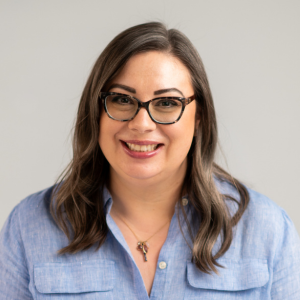
Hey there, CEO. Racheal Cook here, founder of The CEO Collective® and host of the Promote Yourself to CEO® podcast, and I'm back. I'm sitting at my desk at home in Richmond, Virginia, recording a fresh batch of episodes for you, and I'm not going to lie, it's kind of weird. It has been a while since I sat down to record new content.
In fact, if you listened to the episodes I released in June and July, I was so excited that I was batching well in advance. I think I had batched over two and a half months worth of content to go out leading up to and while I was in Italy, and even a few weeks after I had returned, so that I would have a little bit of buffer.
Me being the planner by default, I was thinking I was so on top of it to have a few extra episodes and newsletters go out even after I had returned so I'd have a few weeks buffer to get over the jet lag and ease back into work. I even had ease back in on my calendar. And then life decided to life.
What Happened With Granny
Like I shared at the intro, I got the call that my granny died while I was in Italy. As soon as I got home, I pretty much had to get ready for the funeral, and that's when it really, really sunk in. That's when it really hit me that she was gone.
I knew that this was going to happen. She was almost 98 years old. She literally made it to 97 and nine months, which is pretty incredible, pretty incredible life. And I truly think she held on for my mom, who you probably remember passed in December. So I wasn't shocked, but it doesn't matter all the time how much you know things are going to happen. The reality of it hits different once it actually happens.
After my mom died, I remember having conversations with my therapist where I was like, "I really need to slow down and give myself time to process," because I know myself really well, and I know that I can distract with work instead of processing my feelings. I intentionally slowed down for six months after my mom died so I would have time to really process my grief and the complicated feelings I had after such an intense year of caregiving for her. But with my granny, it was like the next layer on top of that.
So I was emotionally, mentally, physically forced to pause after Granny. I just couldn't hold it together. I had to fall apart a bit. One was more of a decision, and one was life laughing at me saying, "Oh, you think you can control how this grief is going to go? That is not how this works."
So I've been navigating that, leaning into my support system, leaning into amazing therapists, amazing coaches, my amazing family, my husband, my dear friends who've been there for me. I have really just been letting myself truly feel everything and process everything. I remember telling my family, I was like, "I do not want to come back to this church again for a while. Y'all better go get your physicals and make sure you're in tip-top shape, because I'm not doing another funeral this year."
What Grief Does to Focus
So that's what has been happening. I basically took the rest of July off and didn't have it in me to get much done. My 90-day plan kind of flew out the window, because even though I had built into the plan my trip to Italy and a buffer week for recovering from jet lag and getting back into the business, it was based on me actually having the mental and emotional capacity to dig into new projects, and I just didn't have it in me to start anything new.
And the one interesting thing that I've really learned about this process is how much grief changes your brain in a lot of ways. Usually something I'm really good at is focusing on a task. That has been a strength I've had my whole life. Once I get into something, I can lock in and get hyper-focused and get so much done and be incredibly productive.
But I could not do it in July. Even simple non-work related things, like reading is one of my favorite hobbies. When I really get into a book, I can read a book in a day, you know? I couldn't read anything. I just couldn't stay focused on a page long enough to really get through it. So my brain was just not at 100%.
What Kept Running While I Fell Apart
And that's okay, because even while I was taking that time off, we were able to regroup, and the things in my business that could run without me, that have been running without me, continued to run without me. So it's not like the business fell apart because I fell apart, which is good, right? Your business shouldn't fall apart when you fall apart.
You should be allowed to fall apart. You're a person. We're human. We're going to have those moments. So my business kept running all of the things that weren't hinging on me.
What was able to keep going: my ads continued running as part of our attract strategy. I have been working with Gabi Day, Hype-Ma'am, and she has been running all of my ads for the last year and a half or so. She has just been chugging right along, coming up with new ideas, keeping my ads going, launching a Marketing for High-Trust Businesses private podcast series that we had worked on before I left. All of that went out even when I was taking this much needed time.
And my team just kind of kept things going. We had already built so much infrastructure, and that was great because that means I could limit where I needed to show up in my business to the things that only I could do.
When the 90 Day Plan Falls Apart
I did have to triage that a little bit. I had to decide, okay, if I only have the mental, emotional, energetic capacity to handle just a little bit, what are the most important things?
Being with my clients, hands down, most important thing. So taking care of those clients, having those one-on-one calls with the new clients, having my weekly calls with the clients inside of The CEO Collective, that was super fiercely protected.
But some things did get dropped in that process, and the newsletter and the podcast dropped. Those were two things that I could have just said, "Hey, let's just repurpose a few things for a few months," but I felt that, one, we'd already repurposed a lot of things while I was taking care of my mom, so I didn't want to repurpose anything that already had been repurposed in the last year or so.
And two, things are changing. There's a lot of shifts happening in the world, so I didn't want to just repurpose something I didn't feel like would be incredibly relevant. I felt like, you know what? It's okay for this to just be for a little bit.
I share that because, again, we're all going to have these moments where things aren't going to go 100% to plan, and you have to be willing to adapt and adjust, and that's what we did. We looked at the 90-day plan. We said, "Okay, what is an absolute must-do that I need to protect my time, energy, capacity for?" And that was anything client-facing. Everything else just kind of became a nice to do if I had the bandwidth. And I'm glad I did that, because that freed me up in a lot of ways.
Six Months of Quietly Testing AI
So here's what I have been doing. For about the last six months, I've been quietly nerding out on AI. It's been really me following my curiosity, because if you know me at all, you know that I do not just jump on a bandwagon because something is suddenly trending. I do not join the latest tips, tricks, or tactics. I don't jump on new platforms instantaneously.
I always like to take my time. I get a little curious, and I take my time to do my own research so that I can form my own opinion about something. And AI was definitely something I wanted to take my time with before I formed an opinion and presented it publicly, because this is a big one. This is something that I do think is going to be a huge shift in the way that we do business, in the way that we work, and in so many things in the world right now.
And I say that as someone who literally worked in my dad's office when they got their first computer and shifted from having an insurance agency that was run with a phone and a file cabinet to one that now has everything on a computer and went paper-free. I navigated that in the '90s. I watched businesses go online in the early 2000s. I watched and was part of the wave of social media, and I saw how each of those big shifts really had the opportunity to transform business.
So I do see it as, wow, this is one of those watershed technologies that's going to change the game in a lot of ways. And like everything, there are pros and cons to it. Like everything, there is a lot of gray area, and there's a lot more questions right now than there are answers.
But I let myself get really curious, and I let myself dig into it. I started by just doing my own research. And at the time I'm doing all my research and reading what the tech world has to say and what the business world has to say, I'm also simultaneously watching a lot of people who operate in the same world I do, who offer business strategy, who offer coaching and consulting and education.
I started seeing a lot of people come out with their opinions very strongly, very pro-AI, and making their case that especially as women or people who are historically disenfranchised, people who are minorities, this is a huge opportunity, with all of their very convincing evidence that this is an opportunity to give us access to resources that we did not have access to before. Totally understand that point.
I saw people like Reese Witherspoon and Mel Robbins going on and suddenly talking about AI and their thought around we need to get on top of this. That was interesting. That was really interesting to watch. And what was also interesting to watch is the backlash. Read the comments section. There's a lot of people who are not fans, who are very anti-AI. Even my own kid, my teen who is in art school right now, has so much to say around AI and AI-generated art, and trust me, I get an earful all the time when they get home from school and they see me playing around with these different tools.
So I knew that I wanted to take my time to really form my own opinion, because this is more than a yes or a no for me. There's somewhere in the murky middle, right? There's somewhere in the middle that I think I am going to be in, and it's not either never use it or only use it. I think it's use it with context and nuance and discernment, and I credit Randi Buckley, who does Healthy Boundaries for Kind People, for that language. Context, nuance, and discernment.
I think that is truly the most important thing when you're making any big decision around a strategic move in your business, and the choice to use AI is a strategic move.
The Market Research Prompt That Changed My Mind
So I started playing with it, and I decided I was going to quietly play behind the scenes in my own little sandbox of my business and start testing things out and start seeing, well, where could this be applicable? Where does this fit in? And how would I potentially use this in a way that aligns with my values, aligns with the needs of my business, aligns with the needs of my clients? What are the things that are an absolute yes? What are the things that are an absolute no? Where does this fit in for me?
So I started playing with it, and one of the first things I started playing with, as we all do, is using some great prompts. I was going through and using some prompts, and the first prompt that really hit me was one to do market research.
This was probably one of the biggest unlocks for me, because up until then, I hadn't really seen a prompt that I thought was super useful, and this one suddenly was incredibly useful. One of the things that I do for a lot of my clients when I'm working with them is market research. This is something that a lot of small business owners never learn how to do, never take the time to do, but my background in consulting always starts with market research.
We need to go out and interview people. We need to go out and talk to people. We need to understand what the real needs are. We need to understand what they're actually saying. We need to understand how they describe their problem. Market research is one of the things that can make or break a small business, and I've even talked about this on the podcast.
I have for years given my clients this challenge that we would call the 100 Conversations Challenge, where they would go out just for market research and talk to 100 people about the problem they were having that this small business could solve. And clearly, that takes a lot of time. Talking to 100 people, even if it's a half hour for each person, that could easily be 50 hours' worth of work. But that's work that can make a massive, massive impact on your business.
And if you ask me to go out there and do that market research, can you imagine? This is not accessible for a lot of people. It takes a ton of time, it takes a ton of energy, and if you're outsourcing it to someone to do this type of research, this can be tens of thousands of dollars to have good market research for your business.
So I wanted to put it to the test. I started putting it to the test, and I played around with this prompt, I tweaked it for my business, and I wanted to know how my business was different from other businesses that were talking to women entrepreneurs, specifically women entrepreneurs running service-based businesses, specifically that were pre-seven figures, but after six figures. So that messy middle between they broke through their first $100,000 revenue year, but they haven't had a $1 million revenue year, because that's kind of the sweet spot for a lot of my clients.
And what was coming back was fascinating, because in this research that came back, with sources, with quotes from those sources, I realized that language I had been using for a long time now became table stakes. Other people had started adopting the same language I was using.
I used to stand out because I was using language like have more sustainable strategy in your business. The sustainability piece was something that made my business unique, and suddenly in the last couple years, a lot more people started leaning into sustainability. They started leaning into sustainable success, sustainable systems, sustainable scaling, whatever that was.
So it was really interesting, because I realized, oh my goodness, the market has shifted a little bit, and I don't want to stand in a room, on the internet, on a Google search, on whatever, and sound the same as everybody else. It really was affirming to me. Wow, this is research that could have taken me 50 hours to do. This prompt gave it back to me in under half an hour. It was all linked up to the sources it pulled, and that was so insightful for me.
Rebuilding the Website and Testing It on Client Work
And very quickly, I started plugging in more and more prompts to see what else it could pull. I started plugging in, "Okay, here's previous reports I've done for myself or for clients. I want you to format what you just pulled in this way," and I trained it to do exactly that.
I used that first round on myself as my own guinea pig here, and I ended up redoing my entire website for The CEO Collective in a week, which blew my mind. Because in the past, for me to do a website, I am not the techiest person on the planet. I'm pretty good with WordPress and Divi, but I would've had to hire a developer to make everything work together.
And I'm not particularly a designer. I do have an aesthetic, I do have brand guidelines and things like that. But in the past, I probably would have taken a lot longer, because I would've had to outsource a lot of the technical pieces in order to make that happen. This time, I was able to literally build it with Claude and be published in a week.
So by the end of February, I was super fired up about this, and I'd already played guinea pig with my own business, so I started looking towards my client businesses. We were getting ready for another CEO Retreat®. We host them every March, June, September, December.
So I started doing these reports for my clients. I started plugging in information about their businesses to see what it was going to give me, and I was just blown away at the results that we were getting and how this was going to help us make such stronger decisions around their marketing strategy, around their messaging, around their positioning, around how to put things together for their business.
So I started handing these things to my clients and telling them, "Hey, I'm testing this, and I can tell you in my own testing that I do have to push back against AI quite a lot in order to get the result I actually want. So I'm giving you this as a jumping-off point. I want you to go through it and then play with it. You might need to push back against some of these things with AI and ask it to go get you a better result."
The Programs I Invested In
So as I kept playing with this and kept testing things, I started actually signing up to learn things from some different folks. I signed up for Michael Hyatt's program. He has an AI program that's like $25 a month, and I thought that was really interesting, because he was actually teaching you how to use different parts of Claude a little bit more. I remember one of the first things I built in his program was building my own ultimate life and business coach, which was pretty cool. So I tested that, and I was like, "Oh, this is really interesting."
And I started paying attention to some other people who were teaching AI. Now, a lot of people who were teaching AI were teaching it as a plug-and-play solution, and that is not what I found actually gets the best results. I found a lot of the plug-and-play solutions were going to give very generic results and were not aligned with what I as a strategist would have advised anybody to do.
So that was a big red flag for me. I was like, "Okay, this is not ready out of the box. We've got to do something deeper here. There's a huge piece of this that's missing still." And anything that is being marketed as plug and play, it is not plug and play. You're going to have to really adapt it to work for you.
I continued investing into trainings, into education. Actually, while I was in Italy I spent time with Maria-Ines Fuenmayor and did a Codified in the City with her in Florence. We have known each other for so long now, I want to say at least 10 years. She took one of my coaching programs probably about a decade ago, and then she started shifting into AI, so I reached back to her saying, "I want to learn from you now. I'm watching what you're doing. How can we work together?"
And as we went through everything in the pre-work, I told her one of my main issues I was having in the past was I wanted to have an all-in-one dashboard that told me everything at a snapshot that I needed to know on a daily basis about my business. I was frustrated that even when we had a dashboard created, and I use that word loosely, it was like a spreadsheet where we had little zaps pulling information from different places, but it was clunky, and it wasn't really working the way I wanted it to, and it really wasn't giving me all the information I wanted.
I wanted to know where my revenue was. I wanted to know who my next leads were. I wanted to know who our renewals were. I wanted to have a very custom dashboard. And she was like, "This is exactly what we want to do." And then I said, "And I want to now see, like, what other tools could I build out of this?"
So we actually spent a whole day in Florence. I'll put a picture in the show notes, because we had an amazing time, and by the end of it, I kept telling her, "Oh my God, I can't believe..." These are things that I thought I was going to have to hire a developer to create for my business, and I felt like we kept trying in the past, and nothing really fit. I was just beyond excited.
And then I also took another program from Callan Faulkner, and it's called A2A. I think that means automate to accelerate. I was watching her kind of come up, and one thing I really appreciated about her was her stance on AI, that this is here to amplify human work. It wasn't here to replace humans. And I really appreciated that that was one of the stances she took very early on, and it's probably one of the biggest things that sold me on joining her program.
Why Plug and Play Does Not Work
And as I'm working with her and going through her process, I'm realizing something here. The big thing I'm realizing, just like I said, AI is not really going to work for you out of the box. You have to be able to adapt it to your business. I realized there was another big red flag for people adopting AI, and it's you have to train AI, just like you have to train an employee. If you don't take the time to train AI and to teach your AI everything it needs to know, then you're just going to get mediocre results.
So the more I got into this, the more little red flags I started to see for why I could tell people were trying to use it, and it was just not working. And over the last six months, I've started seeing even more that while a lot of people are adopting AI very quickly, it's quickly making everything look the same. Everything sounds the same. Everything's becoming super homogenous, and that is a red flag.
That is such a red flag for small business, because if you are assuming that AI is going to be the savior for your business, and you're just going to be able to jump into Claude or ChatGPT or whatever it is and plug in, "I want you to do this, that, and the other," and it's going to give you right out the gate exactly what you need, that is not how this works, my friends. That is not how this is going to work.
AI Is Only As Good As The Person Operating It
And the funny thing is, these are the same problems I've been seeing for decades before AI even came on the scene. These are the people who would assume that if they could just get a unicorn assistant who could do everything, then all their problems would be solved. If they could just find the perfect copywriter who instantly sounded like them, then all their problems would be solved. And they never take the time to sit down and do the deeper work that needs to happen underneath it, the strategic level work, the foundational level work.
I was even in these programs and talking to other people, realizing how many multimillion-dollar businesses are out there that don't have brand guidelines. They don't have voice guidelines, but they're creating tons of content. They don't have SOPs. They don't have any documented intellectual property. They have nothing that is actually usable for another human, and they think that somehow AI is going to magically figure that stuff out. They're not.
The reality is the AI is only as good as the person operating it. The AI is only as good as the person operating it.
And I think we need to approach AI with a lot more context, nuance, and discernment. Because this is a huge change in the world, just as big as computers were or the internet was, and I think the black or white thinking, the all or nothing thinking isn't helping anyone. It's not helping people to make strategic decisions. And in fact, I'm afraid I'm watching a lot of people jump on the bandwagon and make a lot of mistakes that are going to bite them in the ass in the end.
What Is Coming in the Human First Series
So starting next Thursday, I am going to be sharing five new episodes here on the podcast. Human First, the AI series for high-trust businesses.
I love working with high-trust businesses, businesses that are built on relationships, businesses that are built on the trust that is created between you and your clients and your community. And they trust you because of all of your years of experience and the hard-won lessons that you have. They come to you because you get incredible results for your clients, because you have such an incredible reputation.
And AI is something that, without care, can degrade that, and I'm already seeing it degrade the trust that a lot of people have for these small businesses. I'm seeing it when suddenly all the images are AI, videos are AI, the words we're reading are all AI, the captions are all AI. Suddenly everybody starts to look and sound the same, and you can't build trust like that. You can't build real relationships like that.
So in the next five episodes, I'm going to dive into where I stand with AI, including how I will and will not be using it. Yes, I have created my own internal guidelines around what is okay to use and what is absolutely not okay and never will be used.
I'm going to share some great conversations I've had with people that really have helped me see where AI has gone wrong, especially in how it's making everyone sound the same, how it's making so many people look and sound exactly the same.
I'm going to share the mistakes I'm seeing that people have already made multiple times, and they were making them before AI came on the scene, and this is the biggest mistake that keeps you the bottleneck in your business, even if you're not using AI at all. But we're going to apply it to the AI use case.
I'm going to share how you can start building smarter AI, and I'm going to give you three specific tools I want you to build for yourself and share how to get started with it.
And then I'm going to have a conversation with Gabi Day, who works with me on my ads. She is just incredible. She has been a 90 Day CEO Certified Professional® since we launched that, and has been a part of The CEO Collective, and I'm so excited that we get to collaborate together on my advertising. But we've been collaborating together on the AI tools we've been building internally, both for my business and hers, and we're going to talk about how this is actually helping us to really dig into the things that only we can say that are helping both of our businesses stand out even more.
One Question Before I Go
All right, so there's a little sneak peek into what I've been hyper-fixated on this summer.
As I wrap up here, I just want to ask you a quick question before I go, and it's just a real quick answer. I want to know, what has been the hardest thing for you about marketing your business during the summer months? Not the entire year, but this summer specifically.
I have a theory. There are things that have been happening this summer, and I have a theory about what you might say, and I want to know if I'm right before I finish recording the rest of this series. So hit Reply on the email newsletter that comes out on Thursdays with these episodes, or tag me on Instagram, @racheal.cook, whatever's easiest. I always read these comments, the DMs, the emails, and they are super helpful for me to understand where you're stuck or what your questions are.
And if your marketing has been feeling heavy and you want something to listen to between now and next week, I want you to know I have a private podcast series out called Marketing for High-Trust Businesses. It is specifically designed for businesses like yours, because people know you and trust you. This is not for businesses that are highly transactional and high volume. These are for the businesses where you actually know the names of your clients, and you want people coming to you because of that trust and that reputation.
If you are interested in that, you can go opt into it, and there's also a little assessment I created that you can get when you opt in that will help you see where the gap is in your marketing. That link is in the show notes.
All right. That's it. That's what I got for you today. Thank you so much for your patience with me over the last few months here as I have navigated this particular season. I'm starting to get excited again, as you can tell. I'm starting to get excited again and think about new things I want to create for you and talk about for you. So yeah, I can't wait for this series to come out and to hear your thoughts.
I'll see you next week.